Exploring Frame Rate Variations Guiding Collective Coordination in Browser-Hosted Hybrid Gaming Environments
Drew Vogel · Aug 19, 2026

Exploring Frame Rate Variations Guiding Collective Coordination in Browser-Hosted Hybrid Gaming Environments
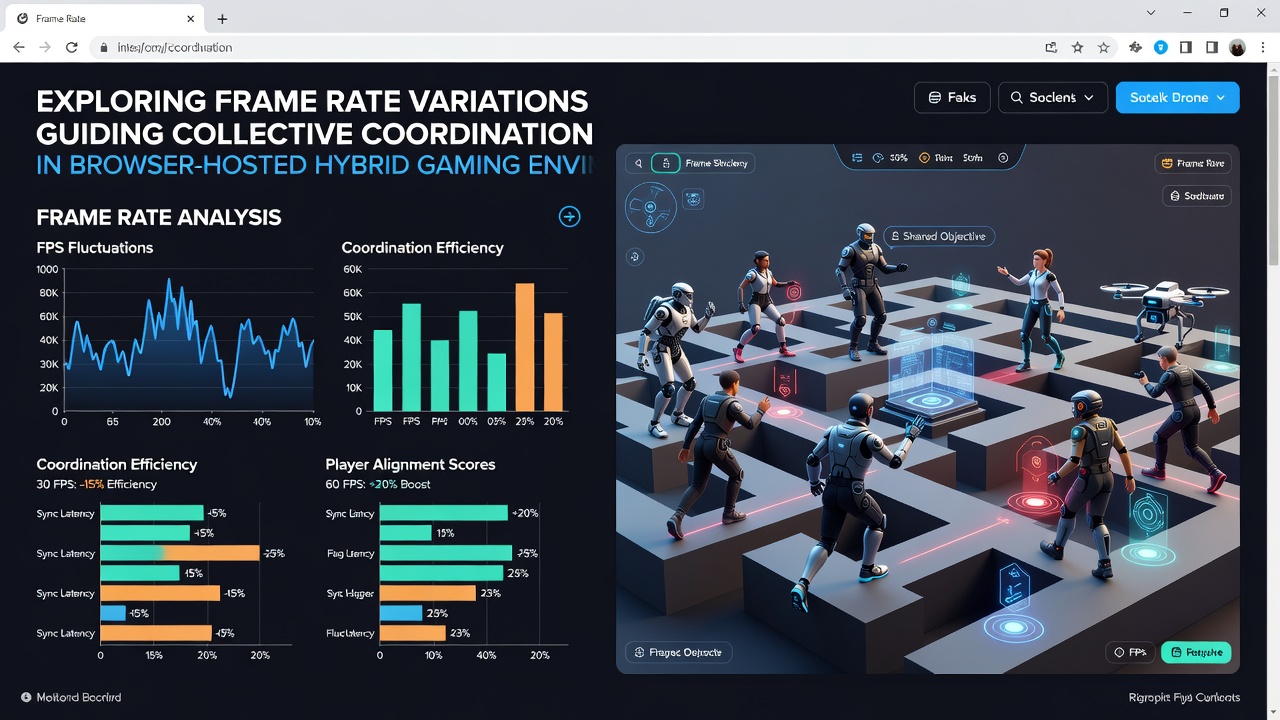
Frame rate variations in browser-hosted hybrid gaming environments shape how players achieve collective coordination across merged mechanics that blend navigation challenges with precision targeting and puzzle resolution. Researchers have documented these dynamics through extensive testing of HTML5 and WebGL implementations where requestAnimationFrame timing directly influences synchronization across distributed client sessions. Data from multiple platform analyses shows that fluctuations between 30 and 60 frames per second create measurable differences in how teams align their actions during real-time group expeditions.
Technical Foundations of Frame Rate Management
Browser engines handle frame delivery through JavaScript event loops and GPU-accelerated rendering pipelines that respond to device capabilities and network conditions. Studies conducted by academic teams at institutions across North America and Europe reveal that inconsistent frame pacing disrupts the shared state updates required when players combine racing routes with shooting accuracy tasks. Those who examined WebSocket communication patterns found that frame drops force compensatory adjustments in client-side prediction algorithms to maintain group coherence.
Hybrid game formats layer these requirements onto single sessions where one participant optimizes a path while others handle targeting sequences. Evidence from performance logs indicates that frame rate stability above 45 frames per second supports tighter coordination windows during simultaneous navigation and accuracy events. Lower rates extend the interval between state broadcasts and increase the likelihood of divergent player views within the same virtual space.
Coordination Patterns Across Varying Frame Conditions
Collective decision trees in these environments adapt when frame rates shift because input sequences arrive at irregular intervals. Observers note that teams relying on shared visual cues for route optimization must recalibrate their timing expectations when one or more clients experience throttling from background processes or bandwidth constraints. Research published through the Association for Computing Machinery demonstrates that such adaptations often involve explicit verbal or text-based signaling to realign group strategies after desynchronization events.
August 2026 benchmarks collected from major browser vendors highlighted improvements in variable refresh rate support within WebGPU implementations. These updates allow smoother transitions between 30 and 120 frames per second without forcing full session restarts. Teams testing hybrid scenarios that merge exploration elements with multiplayer shooting reported reduced coordination breakdowns once adaptive frame pacing became available across Chrome, Firefox, and Edge distributions.
Resource Allocation and Latency Interactions
Resource distribution frameworks in browser environments allocate GPU cycles and network packets according to detected frame delivery rates. When frame variations occur, the system prioritizes critical state updates for precision actions while deprioritizing secondary visual elements. Figures from industry reports compiled by the Entertainment Software Association show that optimized allocation patterns reduce average desync events by measurable margins in group play sessions.
Those who studied input lag effects across hybrid titles discovered that frame rate drops compound existing network latency and force players to adopt predictive movement models. Coordination protocols emerge naturally as participants learn to issue commands earlier relative to their local frame timeline. This adjustment compensates for the staggered arrival of updates on other clients operating under different performance constraints.
Emerging Standards and Implementation Trends
Web standards organizations continue refining timing APIs that give developers finer control over frame scheduling in mixed-genre environments. A 2025 analysis from European research networks indicated that consistent use of performance.now() timestamps combined with adaptive rendering budgets improves collective task completion rates in browser-hosted expeditions. Developers implementing these techniques report fewer instances where frame variation forces manual intervention by players to restore group alignment.
Case examples from platform operators illustrate how monitoring tools track frame rate histograms across thousands of concurrent sessions. These datasets reveal seasonal patterns tied to device upgrades and browser version adoption rates. Teams that incorporate this telemetry into matchmaking logic achieve more balanced coordination experiences by grouping clients with similar performance profiles.
Conclusion
Frame rate variations continue to serve as a primary variable guiding collective coordination within browser-hosted hybrid gaming environments. Technical measurements and implementation data demonstrate clear relationships between rendering stability, state synchronization, and team performance across combined navigation and targeting mechanics. Ongoing refinements in browser capabilities and developer practices sustain progress in managing these variations at scale.