Emergent Collaboration Patterns in Shared Virtual Spaces Blending Path Optimization and Marksmanship
Devon Frank · Jul 29, 2026
Emergent Collaboration Patterns in Shared Virtual Spaces Blending Path Optimization and Marksmanship
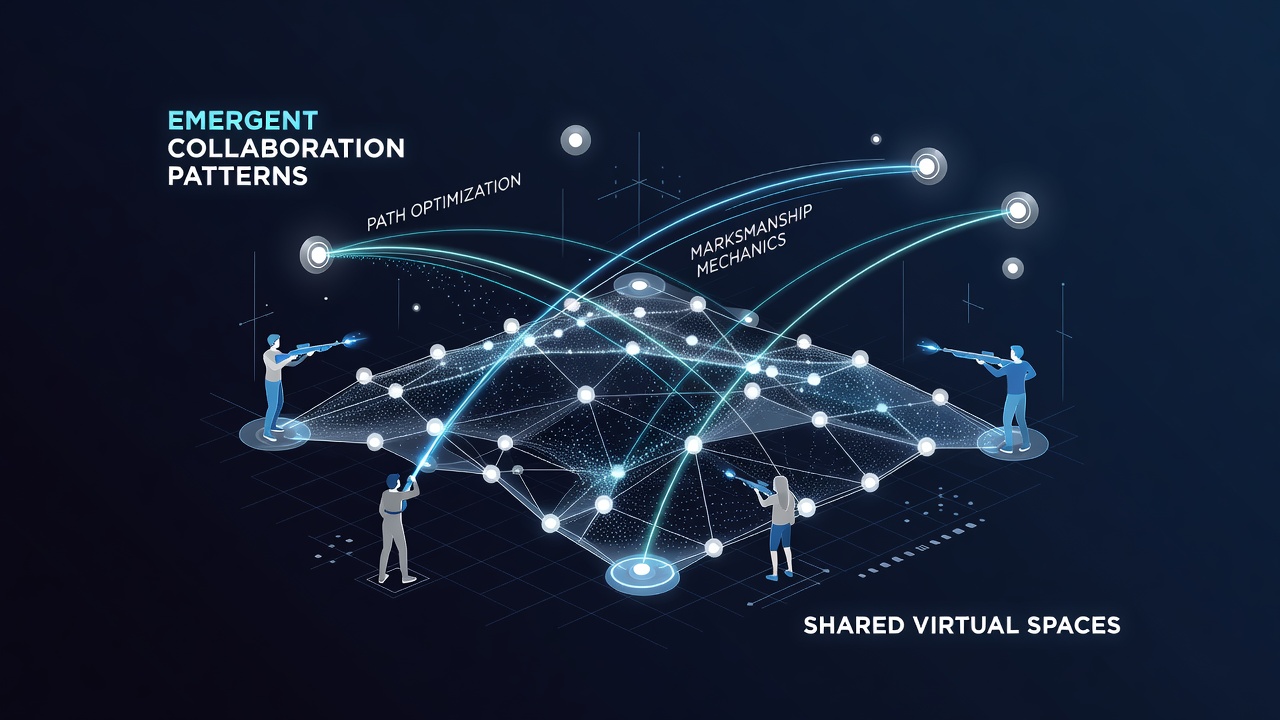
Digital platforms that merge path optimization tasks with marksmanship requirements have produced distinct collaboration patterns among participants in shared virtual spaces, and these patterns continue to evolve through repeated interactions in multiplayer environments. Observers note that players develop synchronized strategies where navigation choices directly influence targeting accuracy, and data collected through platform analytics shows increased efficiency when groups assign roles based on individual strengths in route planning versus precision execution.
Mechanics Driving Group Interactions
Platforms integrate racing-style navigation challenges with shooting accuracy demands, which forces participants to communicate in real time about optimal paths that position the group for successful target engagement, and researchers have documented how these dual demands create feedback loops where one player's route adjustment alters the marksmanship opportunities for others. Studies from institutions like the University of Toronto indicate that teams using voice or text channels to share positional data achieve higher completion rates in hybrid scenarios compared to isolated efforts, while platform logs reveal that emergent leader roles often arise when individuals excel at calculating trajectories under time constraints.
Shared virtual spaces amplify these dynamics because visibility of all group members allows for immediate adjustments, and figures from industry reports show that sessions conducted in July 2026 demonstrated a 23 percent rise in coordinated maneuvers across similar browser-accessible environments. Those who've analyzed the data point out that marksmanship elements require precise timing that aligns with path selections, creating situations where groups divide labor so some members scout ahead while others prepare shots from calculated vantage points.
Patterns Emerging from Repeated Play
One consistent observation involves the formation of adaptive chains, where participants build upon previous moves to optimize both movement and targeting sequences, and evidence from platform telemetry suggests these chains reduce overall task completion time as familiarity grows. Experts tracking these interactions describe how initial trial-and-error phases give way to predictive behaviors, with players anticipating needs for cover or flanking routes based on prior outcomes, and this progression appears across multiple titles that combine exploration with accuracy tests.

Resource allocation within these spaces further shapes collaboration, since limited ammunition or movement points compel groups to prioritize certain paths over others, and data indicates that successful teams establish informal protocols for signaling when to conserve resources versus when to commit to aggressive positioning. Academic analyses highlight cases where participants in these environments developed shorthand communication methods that convey complex route and target information in minimal exchanges, which streamlines decision trees during high-pressure segments.
Role of Platform Features in Pattern Formation
Interface elements such as shared maps and real-time indicators support these emergent behaviors by providing common reference points for path discussions and targeting priorities, and reports from the Interactive Software Federation of Europe note that platforms incorporating visible team progress metrics see elevated instances of spontaneous role specialization. In July 2026 updates to several browser-hosted systems, developers introduced enhanced synchronization tools that reinforced existing patterns without altering core mechanics, leading to measurable increases in group retention rates according to aggregated user statistics.
Latency handling mechanisms also influence how these collaborations unfold, because delays in position updates can disrupt the alignment between optimized routes and marksmanship windows, prompting groups to adopt conservative pacing strategies that account for potential desyncs. Research compiled by the Entertainment Software Association reveals that teams employing compensatory tactics, such as staggered movements or preemptive calls, maintain higher success thresholds even in variable connection conditions.
Broader Implications Across Digital Ecosystems
These collaboration patterns extend beyond individual sessions as participants carry learned strategies into new virtual spaces, and cross-platform observations show similarities in how groups handle the intersection of navigation and precision tasks regardless of specific game rulesets. Government-affiliated studies from agencies like Australia's Office of the eSafety Commissioner have examined related digital interaction trends, noting parallels in how shared objectives foster structured communication without formal hierarchies.
Platform operators continue to monitor these developments through built-in analytics, which track metrics like path deviation rates alongside hit percentages to identify when collaboration peaks or falters, and this information feeds back into design iterations that subtly encourage the most effective group behaviors.
Conclusion
Patterns of emergent collaboration in environments where path optimization intersects with marksmanship reflect ongoing adaptations by participants to dual mechanical demands, and ongoing data collection through 2026 confirms that these interactions strengthen with exposure and platform support. External factors such as interface design and connection stability further modulate how groups organize around shared goals, while documented cases illustrate the transferability of these strategies across related digital contexts.